Category: Brain and Memory Health

Articles about brain and memory health. Tips and tricks to improve your mind, brain capacity and anti-aging tips for memory strength and preservation.

  • Unlocking Mental Clarity: How NeuroXen’s Ingredients Support Focus, Memory & Long‑Term Brain Health

    In a world full of constant notifications, multitasking, and mental overload, many people are searching for natural ways to stay sharp, energized, and mentally resilient. NeuroXen is formulated around that exact need — blending well‑studied nutrients that support memory, focus, learning speed, and overall cognitive performance. Whether you’re juggling work, creative projects, or simply want to feel more mentally “on,” understanding how these ingredients work can help you make informed choices about your brain health.

    Helpful Resource

    Helpful Resource for Improving Mental Clarity
    If you’re exploring natural ways to support mental clarity, focus, and long‑term cognitive wellness, you may want to learn more about the formula behind NeuroXen. Explore the full ingredient list, research, and bundle options here:
    Visit the NeuroXen Product Page

    What Makes NeuroXen’s Formula Stand Out?

    NeuroXen combines botanicals, phospholipids, antioxidants, and essential nutrients that work together to support six key cognitive indicators: memory, clarity, focus, learning speed, mental energy, and emotional resilience. Below is a breakdown of the core ingredients and why they matter.

    Bacopa Monnieri Extract

    Traditionally used in Ayurvedic wellness, Bacopa is known for supporting memory retention, learning speed, and reduced mental fatigue. It’s often chosen by people who want to stay mentally steady during long workdays or study sessions.

    Phosphatidylserine

    This natural phospholipid helps nerve cells communicate efficiently. It plays a role in sharper thinking, better recall, and maintaining healthy cognitive function as we age.

    Huperzine A

    Huperzine A supports acetylcholine levels — a neurotransmitter essential for learning and memory. It also helps protect brain cells from oxidative stress.

    DHA (Docosahexaenoic Acid)

    DHA is an omega‑3 fatty acid that supports brain structure, long‑term cognitive health, and focus. It’s especially important for maintaining healthy neural pathways.

    Green Tea Leaf Extract

    Rich in antioxidants and L‑Theanine, green tea extract supports calm, focused energy without the jittery feeling that can come from caffeine alone.

    Full B‑Vitamin Complex

    B‑vitamins help fuel brain energy metabolism and support mood balance. They’re essential for mental stamina and overall cognitive performance.

    Mineral Support (Magnesium, Zinc, Selenium)

    These minerals play a role in neurotransmitter function, focus, and mental resilience — especially during times of stress or high cognitive demand.

    If you’re curious how these ingredients work together in a daily routine, you can explore the full breakdown and bundle options here: 👉 Learn more about NeuroXen’s formula and pricing

    How NeuroXen Supports Daily Cognitive Performance

    1. Memory & Recall

    Ingredients like Bacopa and Phosphatidylserine help support the brain’s ability to store and retrieve information — helpful for students, professionals, and anyone wanting to stay mentally sharp.

    2. Focus & Concentration

    Green tea extract and Huperzine A support sustained attention without overstimulation. This can be especially beneficial during long work sessions or creative projects.

    3. Learning Speed

    By supporting neurotransmitter activity and neural communication, NeuroXen’s formula helps the brain process information more efficiently.

    4. Mental Energy

    B‑vitamins and DHA help fuel the brain’s energy pathways, supporting clarity and alertness throughout the day.

    5. Emotional Resilience

    Minerals like magnesium and zinc play a role in mood balance and stress response — important for staying grounded and mentally steady.

    If you’re looking for a natural, research‑backed way to support clarity and focus, you can check out the full NeuroXen details here: 👉 See ingredient research and bundle options

    Why People Choose NeuroXen

    Many users appreciate that NeuroXen is designed for long‑term cognitive support, not just a quick boost. The formula is crafted for:

    • Busy professionals
    • Students
    • Creatives and entrepreneurs
    • Adults wanting long‑term brain health support
    • Anyone experiencing occasional brain fog or mental fatigue

    The longer the formula is used, the more noticeable the benefits may become — especially for clarity, memory, and sustained focus.

    If you want to explore how NeuroXen fits into your wellness routine, you can visit the official page here: 👉 Explore NeuroXen and current offers

    Final Thoughts

    Supporting your brain health is one of the most meaningful investments you can make — whether you’re aiming for sharper focus, better memory, or long‑term cognitive wellness. NeuroXen brings together a blend of botanicals, nutrients, and antioxidants that work synergistically to help you stay mentally clear, energized, and resilient.


  • How to Improve Memory, Focus & Mental Clarity Naturally (Simple Daily Habits That Work)

    Struggling with brain fog, forgetfulness, or lack of focus? You’re not alone. More people are searching for ways to improve memory, concentration, and mental clarity naturally—without relying on stimulants or quick fixes.

    The good news? There are simple, science-backed ways to support your brain health and improve how you think, focus, and remember things daily.

    Let’s break it down:


    What Causes Brain Fog and Memory Problems?

    Before improving your brain health, it’s important to understand what may be holding you back.

    Common causes of brain fog and poor memory include:

    • Chronic stress
    • Poor sleep quality
    • Blood sugar imbalances
    • Lack of key nutrients
    • Mental fatigue and overload
    • Aging-related cognitive decline

    Research shows that factors like oxidative stress and poor blood flow to the brain can impact memory, focus, and learning ability.

    That’s why supporting your brain from multiple angles is key.


    1. Support Brain Energy and Mental Focus

    Your brain needs a constant supply of energy and nutrients to function properly.

    When your brain lacks energy, you may experience:

    • Sluggish thinking
    • Trouble concentrating
    • Low motivation

    Certain natural compounds can help support mental alertness and sustained energy, improving your ability to stay focused throughout the day. For example, ingredients like plant-based compounds found in green coffee and cocoa may help increase alertness and mental performance.

    Tips to Boost Mental Energy:

    • Stay hydrated throughout the day
    • Eat balanced meals with protein and healthy fats
    • Avoid sugar crashes
    • Take breaks to prevent mental fatigue

    2. Improve Memory and Learning Ability

    Memory is closely tied to how your brain communicates internally. Neurotransmitters (chemical messengers in the brain) play a major role in:

    • Memory recall
    • Learning new information
    • Focus and attention

    Certain amino acids and herbal ingredients help support these neurotransmitters, improving how well your brain processes and stores information.

    Daily Habits for Better Memory:

    • Practice active recall (quiz yourself)
    • Get quality sleep (7–8 hours)
    • Stay mentally active (reading, puzzles)
    • Support brain nutrition consistently

    3. Reduce Stress and Mental Overload

    Stress is one of the biggest enemies of brain health.

    When stress levels are high:

    • Focus decreases
    • Memory weakens
    • Mental clarity drops

    Adaptogenic herbs (natural stress-supporting plants) may help your body manage stress more effectively while promoting a calm, focused mind.

    Ways to Reduce Brain Stress:

    • Practice deep breathing or meditation
    • Take breaks from screens
    • Get regular exercise
    • Spend time outdoors

    4. Protect Your Brain from Aging and Damage

    Over time, your brain is exposed to oxidative stress, which can damage cells and contribute to memory decline.

    Antioxidants play a key role in protecting your brain by:

    • Fighting free radicals
    • Supporting long-term brain health
    • Preserving cognitive function

    Many natural ingredients used in brain health routines are rich in antioxidants that help protect neurons and maintain mental performance.

    Brain Protection Tips:

    • Eat antioxidant-rich foods (berries, leafy greens)
    • Avoid excessive processed foods
    • Stay physically active
    • Support long-term brain health habits

    5. Improve Brain Communication (Neuroplasticity)

    Your brain has the ability to adapt and form new connections—this is called neuroplasticity.

    This is essential for:

    • Learning new skills
    • Improving memory
    • Staying mentally sharp

    Supporting neurotransmitter levels and brain function can help improve how efficiently your brain communicates internally.

    Ways to Boost Brain Function:

    • Learn something new regularly
    • Challenge your brain
    • Stay socially engaged
    • Maintain consistent routines

    6. Nutrition for Brain Health

    What you eat directly impacts your brain.

    Key nutrients for brain health include:

    • Amino acids (support neurotransmitters)
    • Antioxidants (protect brain cells)
    • Healthy fats (support brain structure)
    • Minerals (support cognitive function)

    Some natural formulas combine multiple ingredients designed to support:

    • Memory
    • Focus
    • Mental clarity
    • Stress response

    These types of blends often include plant-based compounds, amino acids, and adaptogens working together to support overall cognitive health.


    7. Don’t Ignore Sleep (It’s Critical)

    Sleep is when your brain:

    • Repairs itself
    • Processes memories
    • Clears toxins

    Without enough sleep, you may notice:

    • Brain fog
    • Poor focus
    • Memory issues

    Sleep Tips for Better Brain Health:

    • Keep a consistent sleep schedule
    • Avoid screens before bed
    • Limit caffeine late in the day
    • Create a relaxing nighttime routine

    Final Takeaway: How to Support Brain Health Naturally

    If you want to improve your memory, focus, and mental clarity, the key is consistency.

    Focus on:

    ✔ Daily nutrition
    ✔ Stress management
    ✔ Brain stimulation
    ✔ Sleep quality
    ✔ Long-term habits

    Natural approaches that support brain energy, neurotransmitters, and protection against stress and aging can help you feel sharper, more focused, and mentally energized over time.


    Why This Matters

    Improving your brain health isn’t about quick fixes—it’s about building daily habits that support:

    • Better memory
    • Stronger focus
    • Clear thinking
    • Long-term cognitive health

    Small changes can lead to powerful results over time.

    Learn about supplements that can help you improve your brain health:

  • Understanding Balance & Dizziness: An Educational Guide to Inner‑Ear and Brain Wellness

    Natural Wellness – Balance Support – Healthy Aging

    Feeling steady on your feet is something most people take for granted—until the moment dizziness, unsteadiness, or lightheadedness interrupts daily life. Balance is a complex system involving the inner ear, eyes, muscles, joints, and brain. When even one part of this system becomes overwhelmed or out of sync, it can lead to sensations of spinning, wobbling, or instability.

    This educational guide explores the science of balance, the common causes of dizziness, and the natural lifestyle habits that may help support steadiness and overall wellness. It is designed to help you understand how the body maintains equilibrium and what you can do to support it through gentle, everyday practices.

    What Exactly Is “Balance,” and How Does the Body Maintain It?

    Balance is your body’s ability to stay upright, move smoothly, and adjust to changes in position. It relies on three major systems working together:

    1. The Inner Ear (Vestibular System)

    Inside the inner ear are tiny structures filled with fluid and microscopic hair cells. These detect movement, acceleration, and changes in head position. When the inner ear senses motion, it sends signals to the brain to help you stay oriented.

    2. The Eyes

    Your vision provides constant feedback about your surroundings. Even subtle visual cues help your brain determine whether you’re moving or standing still.

    3. Muscles & Joints (Proprioception)

    Sensors in your muscles and joints tell your brain where your body is in space. This helps you walk, turn, bend, and balance without needing to consciously think about every movement.

    4. The Brain

    Your brain receives information from all three systems and coordinates the appropriate response—whether that’s adjusting posture, shifting weight, or stabilizing your gaze.

    When these systems communicate clearly, balance feels effortless. When communication becomes disrupted, dizziness or unsteadiness may occur.

    Common Factors That May Influence Balance

    Dizziness and balance challenges can arise from many different situations. While everyone’s experience is unique, some common influences include:

    Inner‑Ear Disturbances

    The inner ear plays a major role in balance. When fluid shifts or signals become irregular, the brain may receive confusing information, leading to sensations of spinning or swaying.

    Dehydration or Low Fluid Intake

    Even mild dehydration can affect blood flow and contribute to lightheadedness.

    Sudden Position Changes

    Standing up too quickly can temporarily reduce blood flow to the brain, causing brief dizziness.

    Fatigue or Poor Sleep

    The brain relies on rest to process sensory information effectively. When sleep is disrupted, balance may feel less stable.

    Stress or Overstimulation

    Stress can influence breathing patterns, muscle tension, and sensory processing—all of which may affect balance.

    Nutrient Gaps

    The body requires a variety of minerals and plant compounds to support normal cellular function, including those involved in balance and coordination.

    Understanding these influences can help you identify patterns and make supportive lifestyle adjustments.

    Natural Ingredients Often Discussed in Balance & Wellness Conversations

    Many natural wellness communities explore plant‑based ingredients and minerals traditionally used to support overall vitality. While these ingredients are not treatments, they are commonly discussed for their general wellness properties.

    Here are some ingredients frequently mentioned in educational resources:

    Zinc

    An essential mineral involved in cellular communication and immune function.

    Chromium

    Often discussed for its role in metabolic processes.

    Green Tea Extract

    Rich in natural antioxidants that support general wellness.

    Berberine

    A plant compound traditionally used in various herbal practices.

    Resveratrol

    A natural antioxidant found in grapes and berries.

    Milk Thistle

    Commonly used in herbal wellness traditions for its supportive properties.

    Cayenne Pepper

    Often associated with circulation‑supportive discussions.

    Korean Ginseng

    A traditional herb used for vitality and energy support.

    Banaba Leaf

    A plant used in traditional wellness practices for its natural compounds.

    These ingredients are widely referenced in wellness communities for their potential to support overall balance, clarity, and vitality.

    How Brain Wellness Supports Balance

    Because the brain is the command center for balance, supporting cognitive wellness may also support steadiness. Here are a few educational insights:

    1. Hydration Supports Cognitive Function

    The brain is highly sensitive to hydration levels. Drinking water throughout the day helps maintain clarity and focus.

    2. Nutrient‑Dense Foods Support Brain Cells

    Leafy greens, berries, nuts, seeds, and whole grains provide antioxidants and healthy fats that support overall brain wellness.

    3. Gentle Movement Encourages Coordination

    Activities like walking, stretching, or slow balance exercises help strengthen the communication pathways between the brain and body.

    4. Rest Allows the Brain to Reset

    Quality sleep helps the brain process sensory information and maintain equilibrium.

    Lifestyle Habits That May Support Balance Naturally

    Here are simple, approachable habits that many people incorporate into their daily routines to support overall wellness:

    1. Stay Hydrated

    Drinking water regularly helps maintain circulation and cognitive clarity.

    2. Move Slowly When Changing Positions

    Standing up gradually gives your body time to adjust.

    3. Incorporate Gentle Exercise

    Walking, yoga, tai chi, and stretching can help strengthen balance pathways.

    4. Prioritize Rest

    Sleep supports brain function, coordination, and sensory processing.

    5. Reduce Stress When Possible

    Breathing exercises, journaling, or quiet moments can help calm the nervous system.

    6. Eat a Variety of Whole Foods

    Colorful fruits, vegetables, and whole grains provide nutrients that support overall vitality.

    7. Limit Overstimulation

    Bright lights, loud environments, or rapid movements can overwhelm the senses.

    These habits are simple, accessible, and supportive of overall balance and wellness.

    Healthy Aging & Balance Awareness

    As people age, the systems responsible for balance may require more intentional support. This is a natural part of the aging process, and understanding it can help you stay proactive.

    Healthy aging practices often include:

    • Staying physically active
    • Supporting hydration
    • Maintaining social engagement
    • Eating nutrient‑rich foods
    • Practicing gentle balance exercises
    • Supporting cognitive wellness

    These habits help maintain confidence, mobility, and independence.

    Final Thoughts: Supporting Balance Through Awareness & Daily Habits

    Balance is a remarkable system that depends on the inner ear, brain, muscles, and sensory pathways working together. While occasional dizziness or unsteadiness can be unsettling, understanding how the body maintains equilibrium can empower you to make supportive lifestyle choices.

    By focusing on hydration, rest, gentle movement, nutrient‑dense foods, and overall wellness, many people find they feel more grounded and steady throughout the day. Exploring natural ingredients, traditional herbs, and mindful habits can also contribute to a sense of clarity and balance.

    This educational guide is designed to help you better understand how your body maintains stability—and how you can support it through simple, natural, everyday practices.

    Next Steps:

    If you’d like to learn more about gentle, natural approaches to inner‑ear and brain wellness, you can explore the link below.

  • Natural Ways to Support Memory & Cognitive Wellness

    Introduction

    Memory is one of the most important parts of daily life — it shapes how we learn, how we connect with others, and how we move through the world. While occasional forgetfulness is normal, many people look for natural ways to support long‑term memory, mental clarity, and overall cognitive wellness.

    The good news is that small, consistent habits can make a meaningful difference. Below are simple, research‑supported lifestyle practices that help nourish your brain and support healthy memory function over time.

    1. Prioritize Quality Sleep

    Sleep plays a major role in memory formation. During deep sleep, the brain organizes information, strengthens neural connections, and clears out waste that builds up during the day.

    Tips for better sleep

    • Keep a consistent sleep schedule
    • Limit screens 1–2 hours before bed
    • Create a calming nighttime routine
    • Keep your bedroom cool and dark

    Even small improvements in sleep quality can support better recall, focus, and mental clarity.

    2. Eat Brain‑Supportive Foods

    Certain foods contain nutrients that help support memory and long‑term cognitive wellness.

    Great options include:

    • Leafy greens (spinach, kale, chard)
    • Berries (especially blueberries)
    • Omega‑3 rich foods (salmon, walnuts, chia seeds)
    • Nuts & seeds
    • Colorful vegetables

    These foods provide antioxidants, healthy fats, and vitamins that help nourish the brain.

    3. Stay Mentally Active

    Just like your muscles, your brain benefits from regular “exercise.” Activities that challenge your mind help strengthen neural pathways and support memory.

    Try activities like:

    • Reading
    • Learning a new skill
    • Puzzles or brain games
    • Creative hobbies
    • Memory exercises

    Even 10–15 minutes a day can make a difference.

    4. Move Your Body Daily

    Movement increases blood flow to the brain, which helps support memory, focus, and overall cognitive wellness.

    Simple ways to add movement

    • A short morning walk
    • Stretching or yoga
    • Light strength training
    • Dance breaks throughout the day

    You don’t need intense workouts — consistency matters more than intensity.

    5. Manage Stress Gently

    Chronic stress can make it harder to concentrate and remember things. Supporting your nervous system can help your mind feel clearer and more focused.

    Try gentle stress‑relief practices

    • Deep breathing
    • Meditation
    • Journaling
    • Spending time in nature
    • Slowing down your morning routine

    Small moments of calm throughout the day add up.

    6. Stay Hydrated

    Even mild dehydration can affect memory and focus. Most people feel a noticeable difference in mental clarity when they drink more water.

    Try this simple habit

    Drink a full glass of water first thing in the morning to “wake up” your brain.

    7. Support Your Brain With Consistent Routines

    Your brain loves patterns. Simple routines help reduce mental load and free up energy for memory and focus.

    Helpful routines include:

    • A consistent morning ritual
    • A predictable sleep schedule
    • A daily movement habit
    • A calming evening wind‑down

    These small anchors help your mind feel more organized and clear.

    8. Explore Natural Cognitive Support

    Some people also explore natural supplements that support memory, focus, and long‑term cognitive wellness. These may include herbs, nutrients, or plant‑based blends designed to nourish the brain.

    If you’re curious, I’ve linked a resource below where you can learn more.

    Final Thoughts

    Supporting your memory doesn’t require dramatic changes — it’s the small, daily habits that make the biggest difference. When you nourish your brain with sleep, movement, hydration, and calming routines, you create a foundation for clearer thinking and long‑term cognitive wellness.

    If you’d like to explore natural ways to support your brain health, you can learn more below.

  • How to Support Memory, Focus & Cognitive Wellness Naturally at Any Age

    Many people assume that memory lapses, brain fog, and slower thinking are just a normal part of getting older. But emerging research suggests that cognitive wellness is influenced by far more than age alone. Lifestyle habits, nutrition, stress levels, sleep quality, and even the brain’s internal communication pathways all play a role in how clearly we think and how well we remember things.

    The good news? There are simple, natural ways to support your brain’s long‑term health — and you can start at any age.

    This article explores the foundational habits that support memory, focus, and mental clarity, along with new insights into how the brain maintains healthy communication between neurons.

    1. Why Cognitive Wellness Matters More Than Ever

    In today’s world, our brains are constantly processing information — notifications, multitasking, stress, and endless to‑do lists. Over time, this can contribute to mental fatigue, forgetfulness, and difficulty concentrating.

    But cognitive wellness isn’t just about staying sharp. It affects:

    • daily productivity
    • emotional balance
    • decision‑making
    • long‑term brain health
    • overall quality of life

    Supporting your brain now can help you stay mentally strong and resilient for years to come.

    2. The Brain’s Natural Communication System

    Your brain contains billions of neurons that communicate through tiny electrical and chemical signals. These signals help you:

    • remember names
    • stay focused
    • learn new skills
    • process information
    • maintain mental clarity

    As we age, these communication pathways can become less efficient. Stress, poor sleep, nutrient deficiencies, and lifestyle habits can all influence how well these signals fire.

    This is why supporting the brain’s natural communication system is essential for long‑term cognitive wellness.

    3. Daily Habits That Support Memory & Focus

    You don’t need complicated routines or extreme lifestyle changes. Small, consistent habits can make a meaningful difference.

    ✔️ Prioritize Quality Sleep

    Sleep is when your brain organizes memories, clears waste, and resets for the next day. Aim for 7–9 hours of restful sleep to support mental clarity and focus.

    ✔️ Stay Physically Active

    Movement increases blood flow to the brain, delivering oxygen and nutrients that support cognitive function. Even a 20‑minute walk can help.

    ✔️ Eat Brain‑Supportive Foods

    Certain foods naturally nourish the brain, including:

    • leafy greens
    • berries
    • nuts and seeds
    • fatty fish
    • whole grains
    • antioxidant‑rich fruits

    These foods support energy, focus, and long‑term brain wellness.

    ✔️ Manage Stress Levels

    Chronic stress can affect memory, focus, and mood. Simple practices like deep breathing, stretching, meditation, or journaling can help calm the mind.

    ✔️ Stay Mentally Engaged

    Your brain thrives on stimulation. Try:

    • reading
    • puzzles
    • learning new skills
    • creative hobbies
    • memory games

    These activities help strengthen neural pathways.

    4. The Role of Nutrients in Cognitive Wellness

    Your brain requires specific nutrients to function at its best. These nutrients help support:

    • energy production
    • neuron communication
    • memory formation
    • focus and alertness
    • long‑term brain health

    Many people don’t get enough of these nutrients through diet alone, especially as they age. This is why some individuals explore natural supplements designed to support cognitive wellness as part of a healthy lifestyle.

    These supplements often include ingredients that help nourish the brain, support healthy communication between neurons, and promote mental clarity. When paired with daily habits, they can be a helpful addition to a brain‑supportive routine.

    5. Understanding Age‑Related Cognitive Changes

    It’s normal for the brain to change over time. Many people notice:

    • slower recall
    • occasional forgetfulness
    • difficulty multitasking
    • mental fatigue
    • reduced focus

    These changes don’t necessarily indicate a problem — they’re often a sign that the brain needs more support.

    By focusing on nutrition, sleep, hydration, and mental stimulation, you can help maintain cognitive wellness and support your brain’s natural ability to stay sharp.

    6. Building a Brain‑Healthy Daily Routine

    Here’s a simple routine you can start today:

    Morning

    • Drink a full glass of water
    • Get natural sunlight
    • Eat a nutrient‑rich breakfast
    • Do a quick mental warm‑up (reading, journaling, puzzles)

    Afternoon

    • Take a short walk
    • Stay hydrated
    • Eat whole‑food snacks
    • Practice stress‑reducing breathing

    Evening

    • Limit screen time before bed
    • Reflect or journal
    • Prepare for restful sleep
    • Support your brain with calming habits

    This routine is easy to follow and supports long‑term cognitive wellness.

    Final Thoughts

    Supporting your memory, focus, and cognitive wellness doesn’t require drastic changes. With simple daily habits, nourishing foods, mental stimulation, and natural lifestyle support, you can help your brain stay clear, energized, and resilient at any age.

    If you’re interested in exploring a natural option that aligns with these concepts and supports healthy cognitive function, you can take a look below.

  • Brain Training Exercises You Can Easily Do to Help Support Memory

    Memory is like a muscle — the more you use it, the stronger it can become. While occasional forgetfulness is normal, regularly engaging your brain in stimulating activities may help support memory enhancement and cognitive function over time.

    The good news? Brain training doesn’t require expensive programs or complicated tools. Simple daily exercises can help keep your mind active and engaged.

    Helpful Resource

    Helpful Resource for Memory & Mental Clarity
    Many people looking to support memory, focus, and overall cognitive wellness find it helpful to pair brain‑training habits with gentle, research‑inspired nutritional support. If you’re curious about an option designed to complement daily mental exercises, you can explore it here: Learn About the Memory Support Formula »

    Why Brain Training Matters

    Your brain forms connections called neural pathways. When you challenge your mind, you strengthen existing connections and encourage new ones to form. This process, often referred to as neuroplasticity, supports learning and memory.

    Consistent mental stimulation may help support:

    • Short-term memory
    • Long-term recall
    • Focus and concentration
    • Cognitive flexibility

    Small efforts practiced regularly often make the biggest difference.

    If you’re working on strengthening focus and recall, you may find this gentle cognitive support option helpful alongside daily brain exercises.


    1. Practice Active Recall

    Instead of rereading information, try recalling it without looking. For example:

    • Read a short article and summarize it from memory.
    • After a meeting, list key points without notes.
    • Memorize a short grocery list before shopping.

    Active recall strengthens memory pathways more effectively than passive review.


    2. Learn a New Skill

    Learning something unfamiliar challenges different parts of your brain. This could include:

    • A new language
    • Playing an instrument
    • A new recipe technique
    • A creative hobby

    Novelty stimulates brain activity and supports cognitive growth.

    If you’re building habits that challenge your mind, here’s a supportive option some readers pair with their daily mental routine.


    3. Use Puzzles and Strategy Games

    Crosswords, Sudoku, logic puzzles, memory matching games, and strategy-based board games can all stimulate mental processing and pattern recognition.

    Even 10–15 minutes per day can provide consistent mental engagement.


    4. Practice Verbal Repetition

    After watching a show, reading a book chapter, or having a conversation, retell what you learned in your own words. Teaching or explaining information helps strengthen memory consolidation.

    This technique engages both comprehension and recall.


    5. Change Up Your Routine

    Small changes in daily habits can stimulate your brain:

    • Take a different route while walking
    • Brush your teeth with your non-dominant hand
    • Rearrange your workspace

    Novel experiences activate attention and awareness, which supports memory formation.


    Support Your Brain Holistically

    While brain exercises are helpful, cognitive health also benefits from:

    • Quality sleep
    • Regular physical activity
    • Balanced nutrition
    • Stress management

    Some individuals also explore supplements formulated to support cognitive function as part of a comprehensive brain health routine. When considering supplements, choose reputable products and consult a healthcare professional if needed.

    If you’re exploring ways to support memory and mental clarity beyond daily exercises, this gentle option may be a helpful next step.

    Next Steps

    In addition to regular brain exercises, a few people explore supportive products that complement mental clarity and memory habits. Below is one such option you may find useful:


    Final Thoughts

    Memory improvement doesn’t happen overnight — but consistent mental engagement can support long-term brain health. Simple brain training exercises practiced daily may help enhance recall, focus, and cognitive clarity over time.

    Small habits, repeated consistently, often create the strongest mental resilience.

  • Morning Routine for Mental Clarity

    A clear, focused morning doesn’t happen by accident. The first 60–90 minutes of your day set the tone for your mental energy, emotional balance, and cognitive performance. When your morning routine supports your brain, you’re far more likely to stay calm, productive, and mentally sharp throughout the day.

    Below is your original routine — now expanded with deeper explanations, science-backed context, and practical tips to help readers understand why each step matters and how to apply it consistently.

    Helpful Resource

    Many people who want to support better focus and mental clarity find it helpful to pair simple morning habits with gentle, research‑inspired nutritional support. If you’re curious about a natural option that aligns with these goals, you can explore it here:
    👉 Learn About a Natural Memory & Focus Supplement

    🌅 1. Hydrate First Thing
    Start your day with a full glass of water to rehydrate your brain and body.

    Your brain is nearly 75% water, and even mild dehydration can affect memory, focus, and mood. After 7–9 hours of sleep, your body naturally wakes up slightly dehydrated. Drinking water first thing helps:

    • Replenish fluid levels
    • Support healthy blood flow to the brain
    • Improve alertness
    • Kickstart digestion and metabolism

    Optional enhancement: Add a squeeze of lemon or a pinch of electrolytes for an extra hydration boost.

    Hydration is one of the simplest ways to support mental clarity. Some people also choose to combine good hydration habits with nutrients that help maintain focus throughout the day.

    See a Cognitive Support Formula People Use Alongside Their Morning Routine

    🧘 2. 5 Minutes of Deep Breathing
    Slow breathing helps reduce stress and improve focus.

    Intentional breathing activates the parasympathetic nervous system — the part of your body responsible for calm, clarity, and emotional regulation. Just a few minutes of slow, controlled breathing can:

    • Lower cortisol
    • Improve mental clarity
    • Increase oxygen flow to the brain
    • Reduce morning anxiety

    Try this: Inhale for 4 seconds → hold for 2 → exhale for 6. Repeat for 5 minutes.

    This simple practice can shift your entire mental state before the day even begins.

    ☀️ 3. Get Natural Light
    Morning sunlight supports healthy sleep cycles and alertness.

    Exposure to natural light within the first hour of waking helps regulate your circadian rhythm — your body’s internal clock. This improves:

    • Daytime alertness
    • Mood (thanks to serotonin production)
    • Nighttime sleep quality
    • Hormonal balance

    Even 5–10 minutes outside or near a bright window can make a noticeable difference.

    🚶 4. Move Your Body
    A short walk or light stretching boosts circulation and brain function.

    Movement increases blood flow, oxygen, and nutrients to the brain. You don’t need a full workout — even gentle movement can:

    • Improve cognitive performance
    • Reduce brain fog
    • Boost energy
    • Support emotional stability

    Examples:

    • A 10-minute walk
    • Light yoga
    • Mobility stretches
    • A few rounds of sun salutations

    Consistency matters more than intensity.

    Movement boosts circulation to the brain, and pairing it with targeted nutritional support can help maintain that mental clarity throughout the day.

    See a Natural Formula That Supports Mental Energy

    🥑 5. Eat a Brain-Supportive Breakfast
    Include protein and healthy fats to support steady energy and focus.

    Your brain needs stable blood sugar to function well. A breakfast rich in protein and healthy fats helps prevent the mid-morning crash and supports neurotransmitter production.

    Brain-friendly options:

    • Eggs + avocado
    • Greek yogurt with berries
    • Oatmeal with nuts and chia seeds
    • Smoothies with protein + healthy fats

    Avoid high-sugar breakfasts that spike and crash your energy.

    📵 6. Delay Phone Scrolling
    Protect your mental clarity by avoiding instant information overload.

    Checking your phone immediately floods your brain with notifications, dopamine spikes, and external demands. This can:

    • Increase stress
    • Reduce focus
    • Hijack your attention for the rest of the day

    Give your brain space to wake up naturally before diving into digital noise.

    Try this: Set a “no phone for 30 minutes after waking” rule.

    📓 7. Set 3 Clear Priorities
    Write down your top goals for the day to improve focus and productivity.

    Your brain loves clarity. When you choose your top three priorities early in the day, you:

    • Reduce decision fatigue
    • Stay focused on what matters
    • Avoid overwhelm
    • Improve follow-through

    This simple habit can dramatically increase your productivity and sense of control.

    Clear priorities help your mind stay organized. Some people also use targeted nutrients to support memory, recall, and mental sharpness throughout the day.

    See a Supplement Designed for Daily Cognitive Support

    Next Steps

    Along with simple daily habits that support mental clarity and focus, some people explore additional tools that may complement their brain health routine. Here’s one option that aligns with those wellness goals: 👉 Supplements for Memory (synaptigen24.com in Bing)

    These types of supplements are often chosen by people looking to support:

    • Memory recall
    • Focus and concentration
    • Mental energy
    • Long-term brain health

    They’re not a replacement for healthy habits — but they can be a supportive addition for some individuals.

  • Memory Improvement Tips

    Helpful Resource

    Helpful Resource for Memory & Mental Clarity
    Many people looking to support memory, focus, and overall cognitive wellness find it helpful to pair daily habits with targeted nutritional support. If you’re curious about a gentle, research‑inspired supplement designed to support mental clarity, you can explore it here: Learn About the Memory Support Formula »

    1. Prioritize Quality Sleep

    Aim for 7–9 hours per night. Keep a consistent sleep schedule (even on weekends). Avoid screens 60 minutes before bed. Keep your room cool and dark.

    2. Exercise (Especially Cardio + Strength)

    • 20–30 minutes brisk walking (even in place)
    • Bodyweight strength training 3x/week
    • Yoga (helps memory through stress reduction)

    3. Actively Challenge Your Brain

    Learning a new skill (language, instrument, drawing) Memorizing small chunks of information daily. Teaching someone else what you learned. Spaced repetition (reviewing information at increasing intervals)

    Next Steps

    Alongside these practical memory improvement tips, some individuals explore supportive tools that may complement their cognitive wellness efforts. Here’s one option that aligns with those goals:

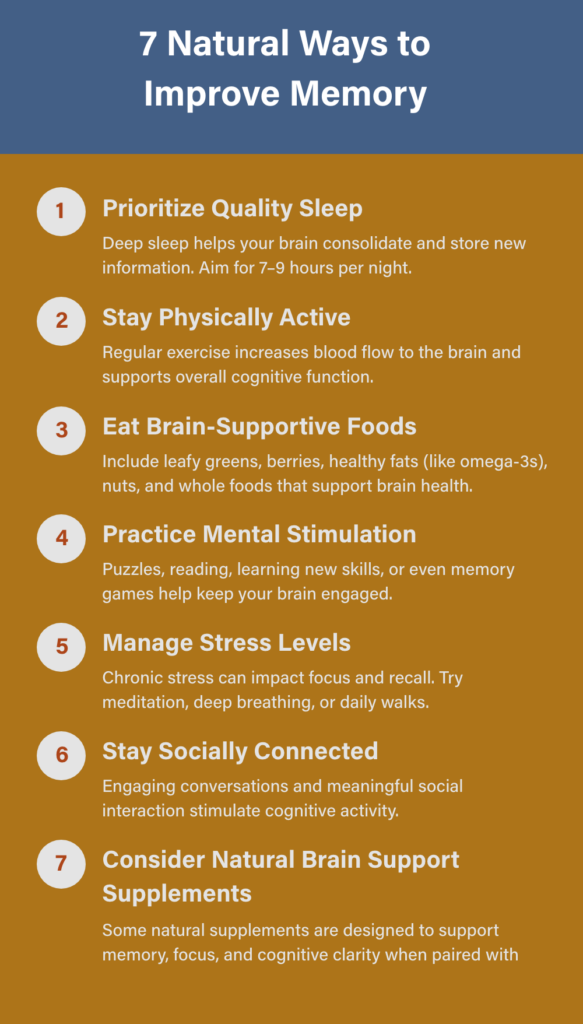
  • 7 Natural Ways to Improve Memory

    1️⃣ Prioritize Quality Sleep
    Deep sleep helps your brain consolidate and store new information. Aim for 7–9 hours per night.

    2️⃣ Stay Physically Active
    Regular exercise increases blood flow to the brain and supports overall cognitive function.

    3️⃣ Eat Brain-Supportive Foods
    Include leafy greens, berries, healthy fats (like omega-3s), nuts, and whole foods that support brain health.

    4️⃣ Practice Mental Stimulation
    Puzzles, reading, learning new skills, or even memory games help keep your brain engaged.

    5️⃣ Manage Stress Levels
    Chronic stress can impact focus and recall. Try meditation, deep breathing, or daily walks.

    6️⃣ Stay Socially Connected
    Engaging conversations and meaningful social interaction stimulate cognitive activity.

    7️⃣ Consider Natural Brain Support Supplements
    Some natural supplements are designed to support memory, focus, and cognitive clarity when paired with healthy habits.

    Helpful Resource

    Helpful Resource for Memory & Mental Clarity
    Many people looking to support memory and mental clarity naturally find it helpful to pair daily habits with targeted nutritional support. If you’re curious about a supplement designed to support focus, recall, and overall cognitive wellness, you can explore it here.

    Additional Ways to Strengthen Memory Naturally

    While the habits above can significantly support memory, building a strong and reliable memory also comes from creating a lifestyle that supports overall brain health. Small daily choices—from what you eat to how you manage stress—can have a noticeable impact on your ability to learn, recall information, and stay mentally sharp.

    Below are additional strategies that complement the habits above and help support long-term brain performance.


    Feed Your Brain With Memory-Supporting Nutrients

    Your brain uses a large portion of the energy your body produces, which means the foods you eat can influence cognitive function and memory performance.

    Diets rich in whole foods—especially fruits, vegetables, healthy fats, and quality protein—provide the nutrients your brain needs to function efficiently. Many researchers highlight the importance of antioxidants and anti-inflammatory foods for protecting brain cells and supporting long-term memory.

    Some foods commonly associated with better brain health include:

    • Fatty fish such as salmon and sardines
    • Berries rich in antioxidants
    • Leafy greens like spinach and kale
    • Nuts and seeds
    • Olive oil and healthy fats

    These foods may help protect neurons, support healthy blood flow to the brain, and reduce inflammation that can negatively affect memory over time.

    Even small dietary changes—such as replacing processed snacks with whole foods—can support long-term cognitive health.

    Some people also choose to pair brain‑healthy foods with targeted nutrients shown to support memory and focus. See an Example of a Cognitive Support Supplement »


    Keep Learning New Skills

    One of the most powerful ways to strengthen memory is to continuously challenge your brain.

    Learning new skills forces the brain to build new neural connections, a process known as neuroplasticity. When you practice something new—whether it’s learning a language, playing an instrument, or trying a new hobby—you are essentially training your brain to store and retrieve information more efficiently.

    Examples of activities that stimulate memory include:

    • Learning a new language
    • Playing a musical instrument
    • Taking up a creative hobby like painting
    • Trying puzzles or strategy games
    • Reading new types of books or topics

    The brain thrives on novelty. Introducing new challenges regularly helps keep cognitive processes active and adaptable.


    Manage Stress for Better Memory

    Chronic stress can interfere with memory formation and recall. When stress hormones remain elevated for long periods, they can disrupt communication between brain cells and affect areas of the brain responsible for learning and memory.

    Practices that help manage stress can indirectly support memory performance. Some effective options include:

    • Deep breathing exercises
    • Mindfulness meditation
    • Gentle physical activity such as walking or yoga
    • Spending time in nature
    • Taking breaks from screens and digital devices

    Research has shown that mindfulness and meditation practices can improve working memory and overall cognitive function by helping the brain focus more effectively.

    Even a few minutes of relaxation or breathing exercises each day can help reduce mental clutter and improve focus.


    Stay Socially Engaged

    Social interaction is another surprisingly powerful factor in brain health. Conversations and social experiences stimulate multiple parts of the brain at once, helping strengthen neural pathways involved in memory and communication.

    Regular social interaction can include:

    • Talking with friends or family
    • Participating in group activities
    • Joining clubs or hobby groups
    • Volunteering or community involvement

    Engaging socially encourages the brain to process new information, interpret emotions, and remember details from conversations—all of which help maintain strong cognitive abilities.


    Maintain Healthy Blood Flow to the Brain

    Healthy circulation plays a major role in memory function because the brain depends on a constant supply of oxygen and nutrients.

    Physical activity is one of the best ways to support this process. Exercise increases blood flow to the brain and can stimulate the growth of new brain cells, particularly in regions associated with learning and memory.

    Simple activities that can support brain circulation include:

    • Walking
    • Cycling
    • Swimming
    • Dancing
    • Light strength training

    Many experts recommend about 30 minutes of moderate activity most days of the week to support both physical and cognitive health.


    Create Daily Habits That Support Brain Health

    Memory improvement rarely comes from a single habit. Instead, it is usually the result of several consistent lifestyle choices working together.

    When combined, habits like good sleep, balanced nutrition, regular movement, and mental stimulation create an environment where the brain can function at its best.

    A simple daily routine for brain health might include:

    • Getting enough sleep each night
    • Eating whole, nutrient-rich foods
    • Moving your body regularly
    • Challenging your brain with learning or puzzles
    • Managing stress with mindfulness or relaxation techniques

    Over time, these habits can help strengthen cognitive performance and support long-term mental clarity.


    Final Thoughts

    Improving memory naturally does not require complicated routines or expensive programs. In many cases, the most effective strategies involve simple lifestyle habits that support overall brain health.

    By combining mental stimulation, healthy nutrition, physical activity, stress management, and quality sleep, you can create an environment where your brain performs at its best.

    Consistency is key. Small daily habits practiced over time can lead to noticeable improvements in focus, recall, and mental clarity.

    Next Steps:


    Incorporating nutrient-rich foods like omega-3s and antioxidants can naturally support memory. Some people also explore a high-quality supplement for additional support, like this brain health formula.