Memory is like a muscle — the more you use it, the stronger it can become. While occasional forgetfulness is normal, regularly engaging your brain in stimulating activities may help support memory enhancement and cognitive function over time.
The good news? Brain training doesn’t require expensive programs or complicated tools. Simple daily exercises can help keep your mind active and engaged.
Helpful Resource
Helpful Resource for Memory & Mental Clarity
Many people looking to support memory, focus, and overall cognitive wellness find it helpful to pair brain‑training habits with gentle, research‑inspired nutritional support. If you’re curious about an option designed to complement daily mental exercises, you can explore it here: Learn About the Memory Support Formula »
Why Brain Training Matters
Your brain forms connections called neural pathways. When you challenge your mind, you strengthen existing connections and encourage new ones to form. This process, often referred to as neuroplasticity, supports learning and memory.
Consistent mental stimulation may help support:
- Short-term memory
- Long-term recall
- Focus and concentration
- Cognitive flexibility
Small efforts practiced regularly often make the biggest difference.
If you’re working on strengthening focus and recall, you may find this gentle cognitive support option helpful alongside daily brain exercises.
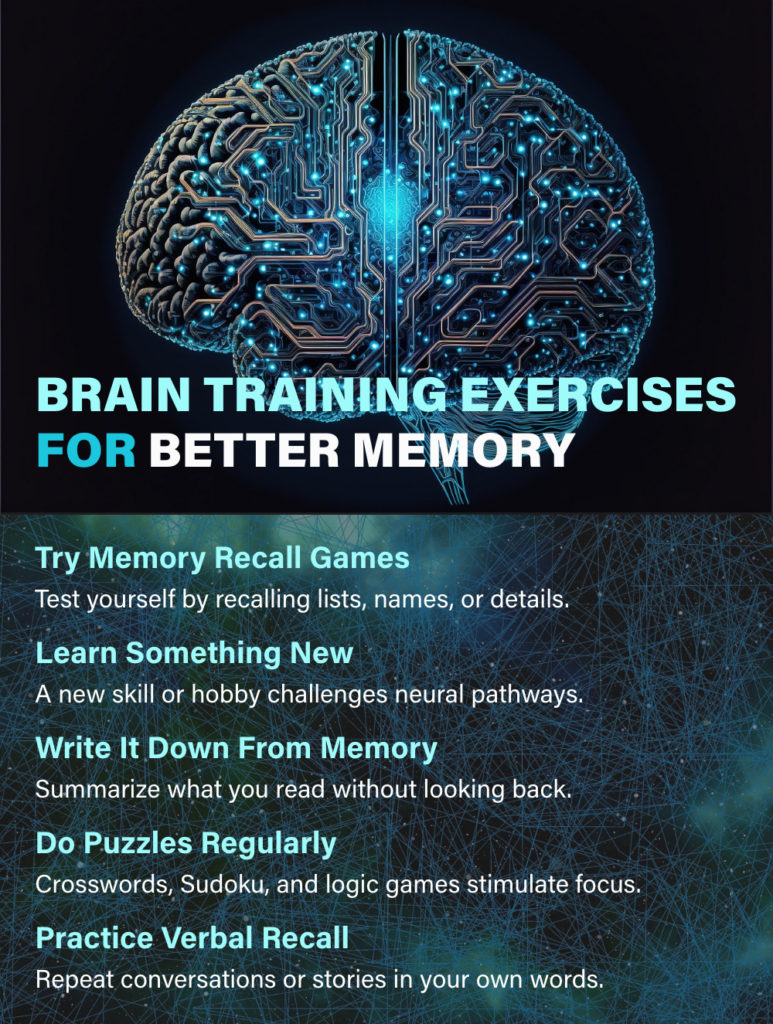
1. Practice Active Recall
Instead of rereading information, try recalling it without looking. For example:
- Read a short article and summarize it from memory.
- After a meeting, list key points without notes.
- Memorize a short grocery list before shopping.
Active recall strengthens memory pathways more effectively than passive review.
2. Learn a New Skill
Learning something unfamiliar challenges different parts of your brain. This could include:
- A new language
- Playing an instrument
- A new recipe technique
- A creative hobby
Novelty stimulates brain activity and supports cognitive growth.
If you’re building habits that challenge your mind, here’s a supportive option some readers pair with their daily mental routine.
3. Use Puzzles and Strategy Games
Crosswords, Sudoku, logic puzzles, memory matching games, and strategy-based board games can all stimulate mental processing and pattern recognition.
Even 10–15 minutes per day can provide consistent mental engagement.
4. Practice Verbal Repetition
After watching a show, reading a book chapter, or having a conversation, retell what you learned in your own words. Teaching or explaining information helps strengthen memory consolidation.
This technique engages both comprehension and recall.
5. Change Up Your Routine
Small changes in daily habits can stimulate your brain:
- Take a different route while walking
- Brush your teeth with your non-dominant hand
- Rearrange your workspace
Novel experiences activate attention and awareness, which supports memory formation.
Support Your Brain Holistically
While brain exercises are helpful, cognitive health also benefits from:
- Quality sleep
- Regular physical activity
- Balanced nutrition
- Stress management
Some individuals also explore supplements formulated to support cognitive function as part of a comprehensive brain health routine. When considering supplements, choose reputable products and consult a healthcare professional if needed.
If you’re exploring ways to support memory and mental clarity beyond daily exercises, this gentle option may be a helpful next step.
Next Steps
In addition to regular brain exercises, a few people explore supportive products that complement mental clarity and memory habits. Below is one such option you may find useful:
Final Thoughts
Memory improvement doesn’t happen overnight — but consistent mental engagement can support long-term brain health. Simple brain training exercises practiced daily may help enhance recall, focus, and cognitive clarity over time.
Small habits, repeated consistently, often create the strongest mental resilience.