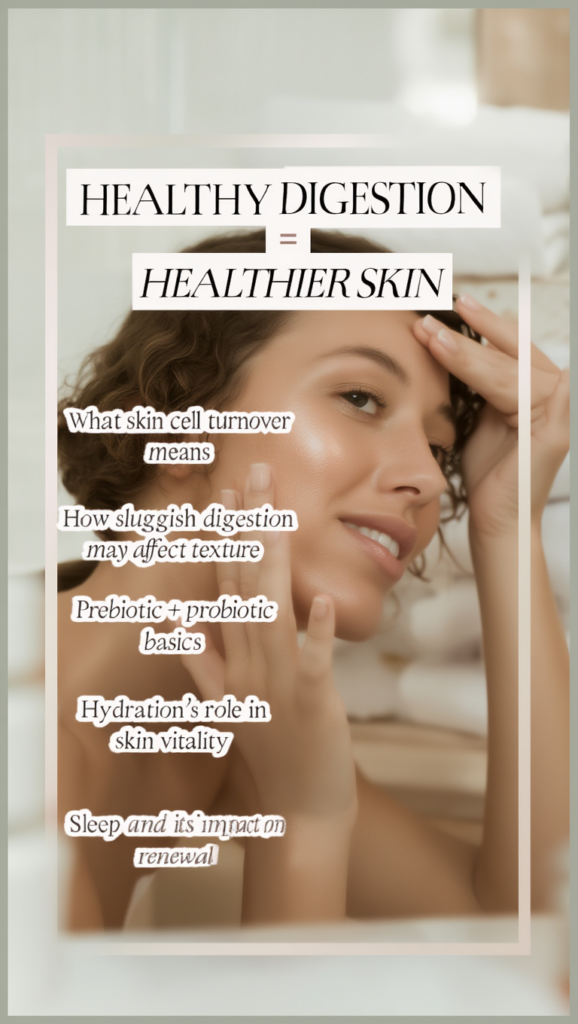
If you’ve ever wondered why your skin sometimes looks radiant and other times dull—despite using the same products—the answer may not be in your skincare routine at all. More and more wellness researchers are exploring the gut–skin connection, a concept showing how your digestive health can influence the appearance, texture, and overall vitality of your skin.
This guide breaks down the science in a simple, approachable way, helping you understand how internal balance may support external radiance.
What Is Skin Cell Turnover—and Why Does It Matter?
Your skin is constantly renewing itself through a natural process called skin cell turnover. Old cells shed, and new cells rise to the surface. When this cycle flows smoothly, your skin tends to look:
- Brighter
- Smoother
- More even in tone
- Naturally youthful
But when turnover slows, dead skin cells can build up, leading to:
- Dullness
- Uneven texture
- Visible fine lines
- Clogged pores
- Dry patches
Many people try to fix these concerns with exfoliants, serums, or expensive treatments. But emerging research suggests that the gut may play a major role in how efficiently your skin renews itself.
How Gut Health Influences Skin Health
Your gut is home to trillions of microorganisms—often called the gut microbiome. These tiny organisms help with digestion, nutrient absorption, and overall wellness. When the gut microbiome is balanced, your body tends to process nutrients more efficiently, which may support healthy skin function.
However, when the gut becomes sluggish or imbalanced, nutrient absorption can slow down. And because your skin relies on vitamins, minerals, and antioxidants to renew itself, this slowdown may influence how quickly your skin cells turn over.
This is why the gut–skin connection has become such a popular topic in natural wellness communities. People are realizing that beauty truly begins within.
Natural Ingredients Often Linked to Gut & Skin Support
The webpage you shared highlights several natural ingredients commonly discussed in wellness spaces. Below is an educational overview of how these ingredients are generally described in natural‑health communities. This is not medical advice—just a look at why these ingredients are popular in holistic wellness discussions.
1. Babchi (Psoralea corylifolia)
Often mentioned in traditional wellness practices, Babchi is associated with skin rejuvenation and is frequently included in natural beauty conversations.
2. Inulin & Dandelion
These are well‑known prebiotics, meaning they help feed beneficial gut bacteria. They are often included in discussions about supporting digestion naturally.
3. Bacillus Coagulans (a probiotic strain)
Probiotics are widely discussed for their potential to support a balanced gut microbiome. Many people associate probiotics with smoother digestion and overall wellness.
4. Fenugreek
Rich in antioxidants, fenugreek is often included in natural beauty and wellness routines for its moisturizing qualities.
5. Lemon Balm
Commonly used in calming teas, lemon balm is frequently mentioned in skin‑soothing and stress‑support conversations.
6. Organic Ginger
Ginger is a popular ingredient for gut comfort, circulation, and overall vitality.
7. Slippery Elm Bark
Often discussed for its soothing properties, especially in relation to the digestive tract.
8. Lion’s Mane Mushroom
A trending ingredient in wellness circles, Lion’s Mane is known for its long history in traditional practices and is often associated with healthy aging.
9. Fennel
Fennel seeds are widely used for digestion and are rich in vitamins that support overall wellness.
Why the Gut–Skin Connection Matters for Healthy Aging
Healthy aging isn’t about reversing time—it’s about supporting your body so it functions at its best. When your gut is balanced, your body may:
- Absorb nutrients more efficiently
- Support natural energy levels
- Maintain smoother digestion
- Promote overall wellness
And because your skin depends on internal nourishment, a healthy gut may help support:
- A more even complexion
- Smoother texture
- A natural glow
- Better hydration balance
This is why so many people are turning to inside‑out approaches to beauty and wellness.
How to Support the Gut–Skin Connection Naturally
Here are simple, approachable habits that many people incorporate into their daily routines:
1. Add More Prebiotic‑Rich Foods
Examples include bananas, oats, asparagus, garlic, and dandelion greens.
2. Include Probiotic Foods
Yogurt, kefir, sauerkraut, kimchi, and kombucha are popular choices.
3. Stay Hydrated
Water supports digestion and helps maintain skin elasticity.
4. Prioritize Sleep
Rest is essential for both gut balance and skin renewal.
5. Reduce Stress When Possible
Stress can influence digestion and skin appearance. Practices like meditation, journaling, or gentle movement can help.
6. Choose Gentle Skincare
Avoid over‑exfoliating or using harsh products that disrupt the skin barrier.
These habits help support both internal wellness and external radiance.
Final Thoughts: Beauty Begins in the Gut
The gut–skin connection is a fascinating area of wellness research, and while everyone’s body is different, many people find that supporting their digestion naturally enhances how their skin looks and feels. Whether you’re exploring healthy aging, natural skincare, or holistic wellness habits, understanding this connection can help you build a more balanced and supportive routine.
Next Steps
If you’re curious about simple ways to support both gut balance and skin wellness, feel free to read more below.