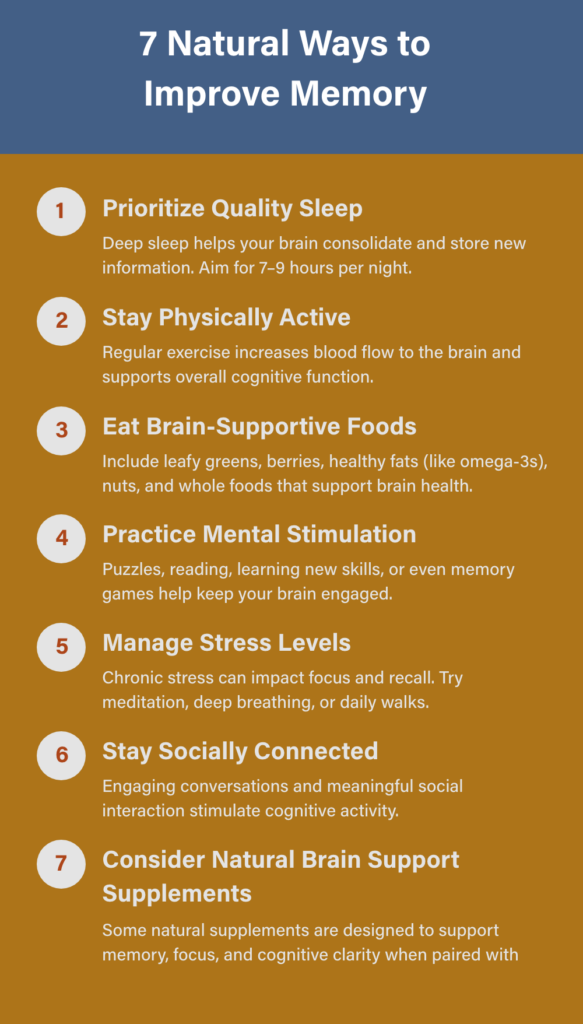
1️⃣ Prioritize Quality Sleep
Deep sleep helps your brain consolidate and store new information. Aim for 7–9 hours per night.
2️⃣ Stay Physically Active
Regular exercise increases blood flow to the brain and supports overall cognitive function.
3️⃣ Eat Brain-Supportive Foods
Include leafy greens, berries, healthy fats (like omega-3s), nuts, and whole foods that support brain health.
4️⃣ Practice Mental Stimulation
Puzzles, reading, learning new skills, or even memory games help keep your brain engaged.
5️⃣ Manage Stress Levels
Chronic stress can impact focus and recall. Try meditation, deep breathing, or daily walks.
6️⃣ Stay Socially Connected
Engaging conversations and meaningful social interaction stimulate cognitive activity.
7️⃣ Consider Natural Brain Support Supplements
Some natural supplements are designed to support memory, focus, and cognitive clarity when paired with healthy habits.
Helpful Resource
Helpful Resource for Memory & Mental Clarity
Many people looking to support memory and mental clarity naturally find it helpful to pair daily habits with targeted nutritional support. If you’re curious about a supplement designed to support focus, recall, and overall cognitive wellness, you can explore it here.
Additional Ways to Strengthen Memory Naturally
While the habits above can significantly support memory, building a strong and reliable memory also comes from creating a lifestyle that supports overall brain health. Small daily choices—from what you eat to how you manage stress—can have a noticeable impact on your ability to learn, recall information, and stay mentally sharp.
Below are additional strategies that complement the habits above and help support long-term brain performance.
Feed Your Brain With Memory-Supporting Nutrients
Your brain uses a large portion of the energy your body produces, which means the foods you eat can influence cognitive function and memory performance.
Diets rich in whole foods—especially fruits, vegetables, healthy fats, and quality protein—provide the nutrients your brain needs to function efficiently. Many researchers highlight the importance of antioxidants and anti-inflammatory foods for protecting brain cells and supporting long-term memory.
Some foods commonly associated with better brain health include:
- Fatty fish such as salmon and sardines
- Berries rich in antioxidants
- Leafy greens like spinach and kale
- Nuts and seeds
- Olive oil and healthy fats
These foods may help protect neurons, support healthy blood flow to the brain, and reduce inflammation that can negatively affect memory over time.
Even small dietary changes—such as replacing processed snacks with whole foods—can support long-term cognitive health.
Some people also choose to pair brain‑healthy foods with targeted nutrients shown to support memory and focus. See an Example of a Cognitive Support Supplement »
Keep Learning New Skills
One of the most powerful ways to strengthen memory is to continuously challenge your brain.
Learning new skills forces the brain to build new neural connections, a process known as neuroplasticity. When you practice something new—whether it’s learning a language, playing an instrument, or trying a new hobby—you are essentially training your brain to store and retrieve information more efficiently.
Examples of activities that stimulate memory include:
- Learning a new language
- Playing a musical instrument
- Taking up a creative hobby like painting
- Trying puzzles or strategy games
- Reading new types of books or topics
The brain thrives on novelty. Introducing new challenges regularly helps keep cognitive processes active and adaptable.
Manage Stress for Better Memory
Chronic stress can interfere with memory formation and recall. When stress hormones remain elevated for long periods, they can disrupt communication between brain cells and affect areas of the brain responsible for learning and memory.
Practices that help manage stress can indirectly support memory performance. Some effective options include:
- Deep breathing exercises
- Mindfulness meditation
- Gentle physical activity such as walking or yoga
- Spending time in nature
- Taking breaks from screens and digital devices
Research has shown that mindfulness and meditation practices can improve working memory and overall cognitive function by helping the brain focus more effectively.
Even a few minutes of relaxation or breathing exercises each day can help reduce mental clutter and improve focus.
Stay Socially Engaged
Social interaction is another surprisingly powerful factor in brain health. Conversations and social experiences stimulate multiple parts of the brain at once, helping strengthen neural pathways involved in memory and communication.
Regular social interaction can include:
- Talking with friends or family
- Participating in group activities
- Joining clubs or hobby groups
- Volunteering or community involvement
Engaging socially encourages the brain to process new information, interpret emotions, and remember details from conversations—all of which help maintain strong cognitive abilities.
Maintain Healthy Blood Flow to the Brain
Healthy circulation plays a major role in memory function because the brain depends on a constant supply of oxygen and nutrients.
Physical activity is one of the best ways to support this process. Exercise increases blood flow to the brain and can stimulate the growth of new brain cells, particularly in regions associated with learning and memory.
Simple activities that can support brain circulation include:
- Walking
- Cycling
- Swimming
- Dancing
- Light strength training
Many experts recommend about 30 minutes of moderate activity most days of the week to support both physical and cognitive health.
Create Daily Habits That Support Brain Health
Memory improvement rarely comes from a single habit. Instead, it is usually the result of several consistent lifestyle choices working together.
When combined, habits like good sleep, balanced nutrition, regular movement, and mental stimulation create an environment where the brain can function at its best.
A simple daily routine for brain health might include:
- Getting enough sleep each night
- Eating whole, nutrient-rich foods
- Moving your body regularly
- Challenging your brain with learning or puzzles
- Managing stress with mindfulness or relaxation techniques
Over time, these habits can help strengthen cognitive performance and support long-term mental clarity.
Final Thoughts
Improving memory naturally does not require complicated routines or expensive programs. In many cases, the most effective strategies involve simple lifestyle habits that support overall brain health.
By combining mental stimulation, healthy nutrition, physical activity, stress management, and quality sleep, you can create an environment where your brain performs at its best.
Consistency is key. Small daily habits practiced over time can lead to noticeable improvements in focus, recall, and mental clarity.
Next Steps:
Incorporating nutrient-rich foods like omega-3s and antioxidants can naturally support memory. Some people also explore a high-quality supplement for additional support, like this brain health formula.