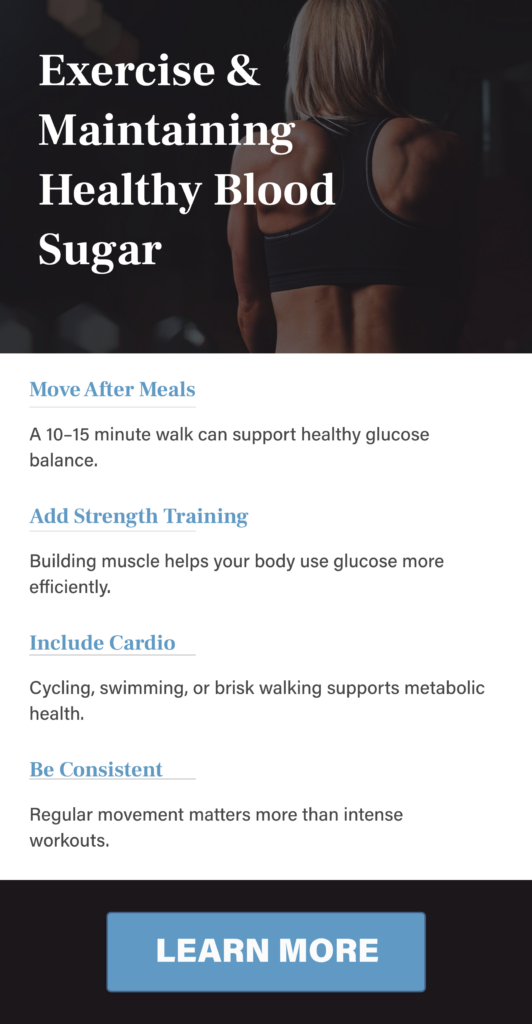
Regular physical activity plays an important role in supporting healthy blood sugar levels and overall metabolic health. When you move your body, your muscles use glucose for energy, which can help support balanced blood sugar response.
Both strength training and cardiovascular exercise offer benefits. Walking after meals, light resistance training, cycling, or swimming can all support steady energy and metabolic function. Even short 10–15 minute walks may help support healthy glucose balance as part of a consistent routine.
Exercise may also support insulin sensitivity, which helps your body use glucose more efficiently. Over time, consistent movement can contribute to improved energy levels and long-term wellness.
For best results, combine regular exercise with balanced nutrition, hydration, and adequate sleep. Small, consistent habits often make the biggest difference when it comes to supporting healthy blood sugar levels naturally.
Helpful Resource
Supporting Healthy Blood Sugar Levels
If you’re focusing on steady energy, balanced cravings, and healthier blood sugar levels — especially as you add more movement into your routine — many people explore gentle, plant‑based nutritional support to complement their daily habits.
One option designed to support metabolic wellness is:
GlucoTonic
A natural, plant‑forward formula created to support healthy blood sugar levels, steady energy, and metabolic balance — especially helpful when paired with regular movement and mindful eating.
Explore GlucoTonic here
This resource is simply here if you’re looking for additional support as you build healthy, sustainable habits.
How Different Types of Movement Support Blood Sugar in Unique Ways
While any movement is beneficial, different forms of exercise support healthy blood sugar levels in slightly different ways. Understanding these differences can help you build a routine that feels both effective and sustainable.
1. Low‑Intensity Movement (Walking, Light Cycling, Gentle Yoga)
Low‑intensity activities help your muscles use glucose steadily without placing stress on the body. Even short bouts — like a 10‑minute walk after meals — can support a healthy post‑meal glucose response. This type of movement is especially helpful for people who are easing into exercise or recovering from fatigue, illness, or long periods of inactivity.
Low‑intensity movement also supports circulation, digestion, and overall metabolic flexibility, making it a great foundation for daily wellness.
2. Strength Training and Muscle‑Building Exercises
Building muscle plays a powerful role in long‑term blood sugar balance. Muscle tissue acts like a “glucose reservoir,” meaning the more lean muscle you have, the more efficiently your body can store and use glucose.
Strength training may support:
- Improved insulin sensitivity
- Better glucose uptake during and after workouts
- Increased resting metabolic rate
- More stable energy throughout the day
You don’t need heavy weights to see benefits — bodyweight exercises, resistance bands, or light dumbbells can all make a meaningful difference.
If you’re beginning to add more movement into your routine and want gentle support for healthy blood sugar levels, here’s a simple option to explore. Support Healthy Blood Sugar Naturally
3. Moderate Cardio (Swimming, Jogging, Rowing, Dancing)
Moderate aerobic exercise helps your body use glucose quickly for energy, which may support healthy blood sugar levels both during the activity and afterward. Many people also find that moderate cardio helps reduce stress — and since stress hormones can influence glucose levels, this creates an additional layer of support.
4. High‑Intensity Interval Training (HIIT)
Short bursts of higher‑intensity movement can support insulin sensitivity and metabolic health, but they’re not necessary for everyone. HIIT can be helpful for people who enjoy faster‑paced workouts, but gentle, consistent movement is just as effective for many individuals.
Why Consistency Matters More Than Intensity
One of the most important things to remember is that you don’t need long or intense workouts to support healthy blood sugar levels. What matters most is consistency. Small, daily habits — like walking after meals, stretching in the morning, or doing a few minutes of strength work — can create meaningful improvements over time.
Your body responds best to movement that feels sustainable, enjoyable, and aligned with your current energy levels.
If you’re ready to support your metabolism as you build consistent exercise habits, this may be a helpful next step. Explore GlucoTonic for Metabolic Support
Pairing Movement With Other Daily Habits
Exercise works even better when paired with simple lifestyle practices such as:
- Balanced meals with protein, fiber, and healthy fats
- Staying hydrated
- Getting enough sleep
- Managing stress through breathing, mindfulness, or gentle stretching
Together, these habits help create a stable internal environment that supports healthy blood sugar levels naturally.