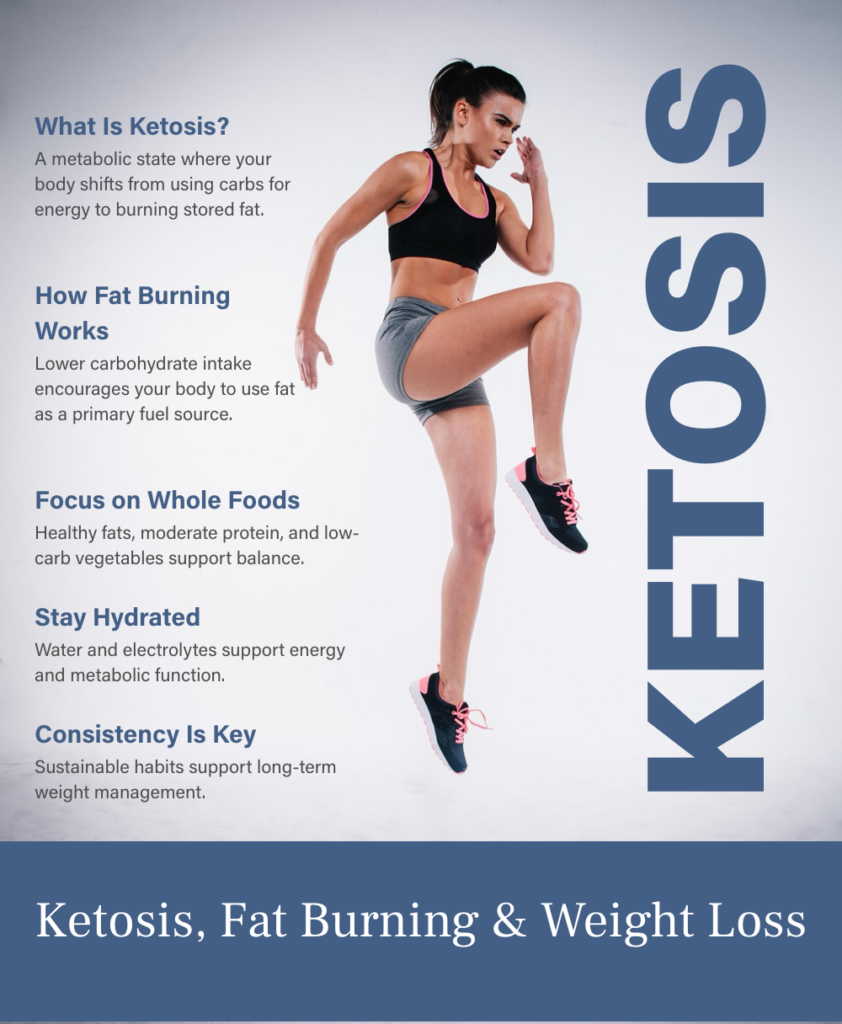
Ketosis has become a popular topic in the world of weight management and metabolic health. Many people are curious about how it works and how it may support fat burning and healthy weight loss. Understanding the basics can help you decide whether a ketogenic-style approach fits your lifestyle.
What Is Ketosis?
Ketosis is a natural metabolic state that occurs when your body shifts from using carbohydrates as its primary fuel source to using fat for energy. Normally, your body breaks down carbohydrates into glucose for fuel. When carbohydrate intake is reduced significantly, the body begins breaking down stored fat into molecules called ketones, which are used for energy instead.
This metabolic shift is what people refer to as “being in ketosis.”
How Ketosis Supports Fat Burning
When carbohydrate intake is lower, insulin levels may decrease, which allows the body to access stored fat more readily for energy. Over time, this can support fat metabolism and may contribute to weight loss when combined with an overall calorie-controlled and balanced approach.
It’s important to note that ketosis is not a magic solution. Sustainable weight loss still depends on:
- Consistent nutrition habits
- Adequate protein intake
- Calorie balance
- Regular physical activity
Foods That Support a Ketogenic Lifestyle
A ketogenic-style eating pattern typically includes:
- Healthy fats (avocado, olive oil, nuts, seeds)
- Moderate protein (fish, eggs, poultry, lean meats)
- Low-carbohydrate vegetables (leafy greens, broccoli, zucchini)
Highly processed carbohydrates and sugary foods are generally minimized.
Focusing on whole, nutrient-dense foods supports not only fat metabolism but also overall metabolic health.
Hydration and Electrolytes Matter
When reducing carbohydrates, the body may release stored water. Staying hydrated and maintaining electrolyte balance can help support energy levels and overall well-being during this transition.
Ketosis and Sustainable Weight Loss
While ketosis may support fat burning, long-term success often depends on consistency and lifestyle habits. Sleep, stress management, strength training, and balanced nutrition all play a role in maintaining metabolic health.
Some individuals also explore nutritional supplements designed to support ketosis or fat metabolism as part of a broader healthy lifestyle. When considering supplements, focus on reputable products and consult a healthcare professional if you have specific health concerns.
Final Thoughts
Ketosis is simply a metabolic shift in how your body uses energy. When combined with whole foods, consistent habits, and mindful nutrition, it may support fat burning and weight management over time.
As with any nutrition strategy, sustainability and balance are key to long-term results.
Next steps
Alongside whole‑food eating and consistent habits for metabolic support, a few individuals choose supportive products that complement their fat‑burning efforts. Below is a helpful option you may want to consider: